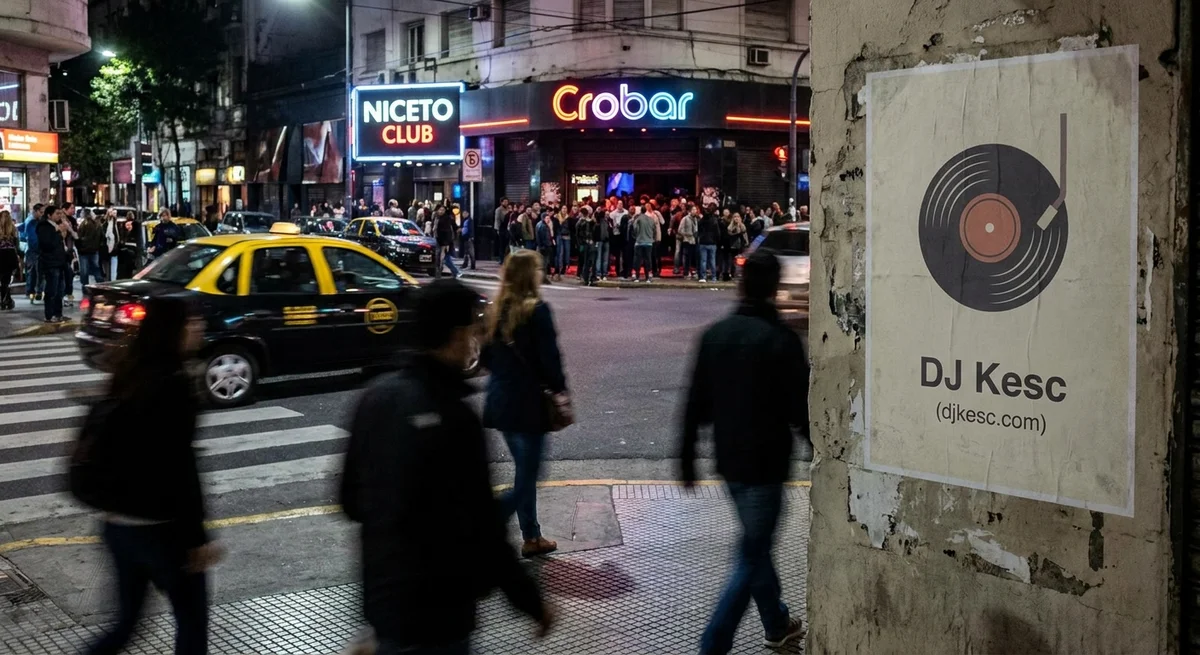
Buenos Aires Late: Crobar, Niceto, and Porteño Minimal
Buenos Aires: City of the 4 AM Boliche
The Buenos Aires nightlife is legendary. Here a “boliche” (club) night starts very late – locals first have a late dinner, then arrive at clubs long after midnight. In fact, clubs don’t even heat up until 2–3 AM (clubbersguide.co.za). As one guide puts it, B.A. clubs “don’t get going until 3 AM and don’t stop until breakfast” (clubbersguide.co.za). Even traditional tango milongas can run well past dawn; for example, the famous La Catedral milonga in Almagro lasts through much of the night (wheredex.com). This late timetable means a night out can easily stretch into Sunday morning (or beyond, on marathon party days).
Cost is a big factor due to inflation. Cover charges are often high – on a big night at Crobar, expect 6,000–15,000 Argentine pesos (roughly USD $15–50 as of 2026) just to enter (thediscreetgentleman.com). Drink prices are similarly steep. Locals cope by paying a premium for drinks or by meeting at home (the “previa”) before going out. Note that paying by card uses the official peso rate, which is much weaker than the informal “blue” rate (travelcurrencyguide.com). So many visitors still bring dollars to exchange into pesos and cover club costs in cash (travelcurrencyguide.com). In short, for a night on the town you’ll need a tu billetera gorda (a fat wallet) (www.cronica.com.ar).
Crobar: Palermo’s Techno Fortress
Crobar is Argentina’s superclub flagship in Palermo. It even made DJ Mag’s 2024 Top 100 Clubs list at #45 (djmag.com). The venue is huge (capacity ~2,300) with cutting-edge, futuristic decor – imagine laser light shows, a giant LED ceiling, and multiple dance floors (djmag.com). Big international techno stars grace Crobar’s lineups; in recent months legends like Chris Liebing, Len Faki, Dan Ghenacia, and Enzo Siragusa have played there (djmag.com). Croatian techno heads as well as local DJs dance together — in fact, DJ Mag notes Crobar “foregrounds Argentinian talent such as Santiago García, Muter, Victoria Engel and D3FAI” when not importing big names (djmag.com).
The vibe at Crobar is intense and focused on music. A travel guide advises that the main room “hits hard from about 2 AM onward,” and that it’s not a place for casual chatting (thediscreetgentleman.com). Clubsbers dress for the lasers – dark, minimal clubwear (black clothing, sneakers) is normal (thediscreetgentleman.com). There are two rooms: the main floor for peak-time techno, and a back room playing deeper or more melodic house. The crowd is serious and dedicated. If you go, buy tickets early online – they sell out for big acts and door prices jump on the night (thediscreetgentleman.com).
Entry cost: For Crobar, cover charges can be steep. A DJ Mag-affiliated guide reports covers of 6,000–15,000 ARS depending on the act (thediscreetgentleman.com). Sometimes that includes one drink. Drinks themselves are similarly pricey. Crobar accepts cards and cash (thediscreetgentleman.com), but in practice cash is faster at the crowded bar (thediscreetgentleman.com). Expect to pay in pesos and tips are still in cash.
Niceto Club: Palermo’s All-Stars Stage
Niceto Club is another Palermo icon (and, as of 2023, over 25 years old (nicetoclub.com)). It’s really two venues in one address (Niceto Vega 5510): a large hall for concerts and big dance nights, plus a smaller basement called Humboldt (200 capacity) for intimate shows (nicetoclub.com). Niceto’s programming is very eclectic. You’ll find everything from indie rock concerts to pop and hip-hop parties, reggaetón nights, and electronic dance events. One famous weekly event is Club 69 (on Thursdays) – a wild queer-friendly party with drag shows, DJs, and a mix of electronic beats (www.night-aires.com). On Fridays and Saturdays Niceto often hosts big local or international bands in rock and pop, or dance parties in the main hall.
The atmosphere is more casual than Crobar’s techno temple. Niceto encourages variety: “such a big diversity of styles, artists and audiences converge” there (www.night-aires.com). Indeed, one travel overview calls Niceto the only place in B.A. where so many genres and crowds mix (www.night-aires.com). It likes to spotlight live shows and DJs alike. For underground dance music in Niceto’s wake, check the Humboldt room – local house and techno DJs or new bands often play there (nicetoclub.com).
Entry cost: Niceto’s cover charges vary by night and event. Smaller shows may have low cover or even free entry (especially if on the guest list), while big concerts can charge high tickets. Watch Niceto’s website or socials for special events. Typically, Thursday–Saturday club nights have an entry fee in pesos, and doors often open around 11 PM and stay until 5–6 AM (www.night-aires.com).
Under Club: Buenos Aires’ Underground Technolounge
Under Club (Joel Silva’s venue on Niceto Vega 5699) is legendary in the B.A. techno scene. It bills itself as an “underground techno haven” for serious fans (www.corner.inc). After a brief closure in mid-2024 following a police raid, Under reopened later that year with promises of world-class techno (ra.co). When it relaunched, big names like DVS1, Ellen Allien and Jeff Mills were scheduled to play (ra.co). So Under lives on as a place for pounding, late-night techno sets.
Under’s ethos is famously inclusive and anti-elitist: the website even declares “NO VIP – somos todos iguales” (“no VIP – we’re all equal”) (underclub.com.ar). The crowd is young, energetic, and there to dance. Doors usually open around midnight, with the main parties running into the early morning. It’s a pretty minimalist space (no fancy tables) – you’ll find high-quality sound and laser lights to match the mood.
Entry cost: Cover at Under also varies. After reopening, big events may cost a few thousand pesos. Payment is usually in pesos (cash and card), as with other clubs. Expect a similar late-night schedule: prime time 2–4 AM, winding down around sunrise.
The Bow: Futuristic Terrace by the River
Newer on the scene is The Bow, at the Punta Carrasco complex on Costanera Rafael Obligado (north waterfront). It’s an electronic dance club with both indoor space and an outdoor terrace on the river (www.corner.inc). The venue is sleek and modern – reviewers call it a “futuristic nightclub with [a] killer sound system” (www.corner.inc). The Bow generally opens on weekend nights (listed as Saturdays ~midnight–7 AM) (www.corner.inc). Expect international DJs and pumped-up production.
The Bow draws a dressy crowd (hotel vibes at Punta Carrasco) but still focuses on house and techno music. Since it sits by Puerto Madero/Costanera, it’s a bit separate from Palermo’s grinding clubs – some B.A. elites whiz there by taxi. Cover charges tend to be high, and reservations or bottle service are common. Check their upcoming schedule online, as they book notable international acts.
Boutique and Micro-House Spots
Outside of the big names, Buenos Aires has a vibrant boutique club scene. These are often smaller venues or pop-up parties focusing on minimal music or local DJs. One famous example was Club Bahrein in downtown’s microcentro. Bahrein opened in 2004 in the basement of Sarmiento 1752, renowned for its Funktion-One sound system and techno focus (bahreinba.com). After 19 years, Bahrein unfortunately announced it would pause events in late 2023 while searching for a new location (bahreinba.com). It remains a legend in local dance culture. Other micro-venues (often hidden lounges or converted lofts) routinely host one-offs under various collectives (look for promotions on social media). These spots may require RSVPs or private lists, and are where you’ll find up-and-coming local DJs playing minimal, house or techno in a close-packed room.
Sunday marathons: A uniquely Porteño habit is the afternoon-to-evening Sunday party. (Weekdays are for work; weekends stretch Sunday!) Sunday clubs like La Bresh (Latin-pop festival at Niceto) and similar revelries can run from early afternoon into night. While we lack space to list them all, it suffices to know that if you’re still limbered up on Sunday morning, local crew events will keep things going – often labeled “maratón” or “fiesta” on flyers. Similarly, some parties even spill into Monday night (such as Monday reggaetón nights at Club Severino) once holidays or extra days allow.
Door Policies and Cover Charges
Expect strict door control at any big boliche. Clubs commonly check IDs and admit only those 18 or over (21 is safer especially at high-end spots). Dress well: dark, neat attire typically wins you entry (no torn jeans or sneakers for upscale venues). At Crobar, for example, the code leans black and minimal (thediscreetgentleman.com). Bouncers can be fickle; foreign visitors often breeze through, but it never hurts to speak Spanish or know someone inside.
Cover charges (“la entrada”) can include drink vouchers or a free drink. It’s normal to pay anywhere from 3,000 to over 10,000 pesos on a busy night (thediscreetgentleman.com). Ladies often get free or reduced entry early in the night (there are many “listas” where a woman can enter free before midnight). Many clubs use QR codes for invites. Pro tip: if it’s a major headliner night, buy tickets online in advance. Door prices can jump, and popular events sell out. Crobar, for example, advises getting tix early “because they sell out and door prices jump” (thediscreetgentleman.com).
Cash versus Card in the Era of Inflation
Most big clubs now accept credit/debit cards at the door or bar, but there’s a catch. Argentina taxes card transactions, and the rate used is the official “dólar turista” exchange (which is much worse than the street rate) (travelcurrencyguide.com). That means every peso your card spends effectively costs more dollars. In practice, many locals still carry cash. ATMs tend to have low limits, so partygoers often stock up on pesos beforehand via official or “blue” (informal) markets. As one guide notes: “card payments use the official exchange rate, which is worse than the blue dollar rate” (travelcurrencyguide.com). So, if you have dollars, many travelers exchange them for pesos at a “cueva” or kiosk and pay cash at clubs for the best value.
That said, some things (like taxi rides or upscale drinks) force you to use a card. Large entries or VIP tables can be booked with plastic. Just remember: anything charged to card will incur hefty conversion fees. If you pay with cash, keep some small bills handy for tips or quick purchases at late-night kiosks (which rarely take cards).
Getting Home: Neighborhoods, Transport, and Safety
By dawn, the city is winding down. Subte (metro) trains mostly stop around midnight on weekdays (later on Friday/Saturday in some lines). However, BA has been extending late-night service: e.g. Line B now often runs until ~2 AM on weekends (www.controldetransito.com.ar). Still, don’t count on the subway to get you home after 4 AM.
After-hours, taxis and rideshares (Uber/Cabify) are the norm (expatsargentina.com) (gowithguide.com). In fact, travel guides strongly recommend Uber or Cabify after dark over walking. Locals say these apps are “easiest and most reliable” late at night (gowithguide.com). It’s safer to order a car than wander empty streets. Fares can surge of course, so it's best to share rides in groups if possible.
Most club areas are fairly safe (Palermo, Costanera, Puerto Madero), but petty theft can happen in crowded spaces. Keep an eye on your belongings on the dance floor. Avoid flashing large amounts of cash or high-end phones. Again, Uber is good: guides note travelers should use Uber/Cabify “rather than walking long distances alone” after partying (gowithguide.com). Stick to well-lit, busy streets if you must walk a block.
Neighborhood tips: Palermo (home to Crobar/Niceto/Under) and Costanera (The Bow) are both tourist-friendly. It’s fine to come and go by Uber/taxi at any hour there. Milonga areas (Almagro, San Telmo) are also lively at night, but in poorer districts like La Boca be extra cautious. Public buses (colectivos) do run 24/7 on main routes, but usually only accept SUBE card (which must be loaded with cash). Most visitors prefer a taxi or Uber.
Conclusion
Buenos Aires boliche culture is not for the faint of heart: it demands stamina, cash on hand, and a late-night spirit. But it rewards with memorable all-night raves, diverse music, and friendly crowds. Whether dancing techno until sunrise at Crobar, catching a drag show at Niceto, or feeling the bass at The Bow, a night out here is a wild ride. Just remember: give yourself an early dinner (the real one), bring pesos (or dollars to exchange), and plan your taxi/ride home in advance. Embrace the Porteño way of life, and you’ll see why Buenos Aires is called a true 4 AM city (wheredex.com) (clubbersguide.co.za).